Does Link Building Still Matter for AI Search in 2026?
AI answer engines don't show ten blue links, so it's fair to ask whether backlinks still do anything. They do, but the mechanism changed, and it's worth understanding exactly how.
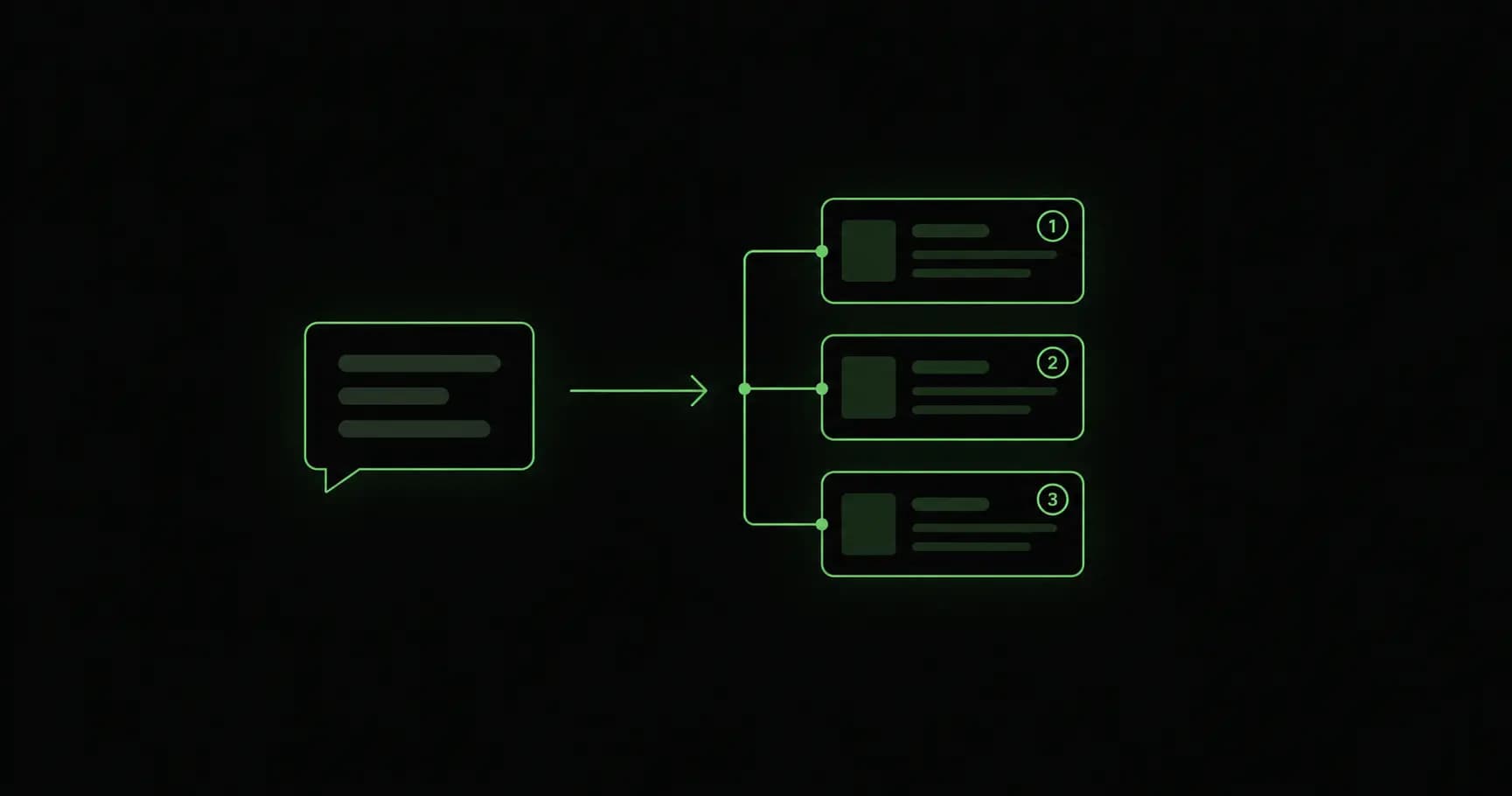
Yes, but not for the reason they used to.
Backlinks were never valuable in themselves. They were valuable because Google used them to decide what to rank, and ranking is how people found you. AI answer engines have replaced the ranked list with a paragraph and a handful of citations, so the honest question isn't "do links still pass authority?" It's "do links still affect whether I'm one of the sources it cites?"
They do, and the path is more direct than most people assume. Here is the short version:
- Retrieval runs on search indexes. If you don't rank, you're not in the candidate set an AI engine reads from.
- Links are how pages get discovered. An uncrawled page can't be cited.
- Authority breaks ties when a dozen pages answer the same question equally well.
- Unlinked mentions now count for something, which is the one genuinely new thing.
The rest of this explains each one, with numbers from our own site.
What AI answer engines actually do
The most common misconception is that these tools answer from memory. The assumption is that the model was trained on the web, absorbed your page somewhere in there, and recalls it when relevant.
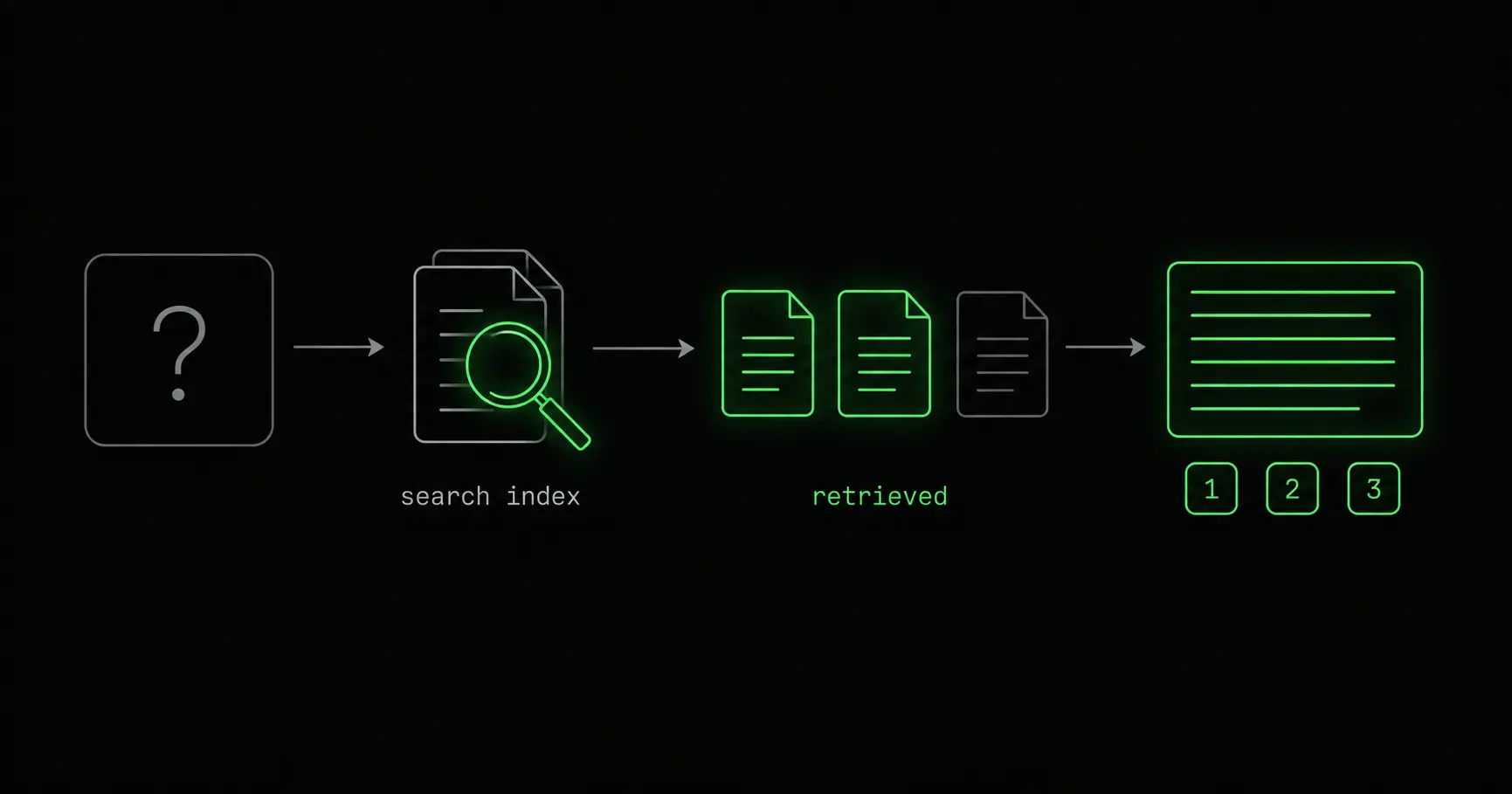
That's not what happens when you ask ChatGPT, Perplexity, or Google's AI features a question about anything current. They retrieve first, then write:
- The system runs one or more searches
- It pulls back a set of candidate pages
- It reads them
- It composes an answer from what it just read
The citations underneath aren't decoration. They're the documents that were actually in the context window when the answer was generated.
That distinction changes everything about how to think about visibility. Your page doesn't need to be memorized. It needs to be retrievable: present in the index the engine searches, and ranked highly enough to make the shortlist of pages it actually reads.
Which puts you back in familiar territory.
So do backlinks affect whether AI cites you?
Yes, through three mechanisms, none of which require the model to know anything about links.
| Mechanism | What it means for you |
|---|---|
| Retrieval runs on search infrastructure | Rank first, or you're never in the candidate set |
| Links drive discovery | No inbound links means slow or no crawling |
| Authority breaks ties | Between equal answers, the stronger domain gets cited |
Retrieval runs on search infrastructure. ChatGPT's search, Perplexity, and Google's AI features all build their candidate set from a search index. Google is explicit about this for its own products: its guidance on AI features and your website says there are no additional requirements to appear in AI Overviews or AI Mode, and that the usual fundamentals are the optimization.
Perplexity and Google use their own indexes; others lean on Bing or a partner. In every case, the pages that get read are drawn from the pages that rank. If you're on page four for a query, you're not in the shortlist, and nothing about your writing quality changes that.
Links are still how pages get discovered. Google's own description of how Search works puts link extraction at the start of the process: a URL becomes known because some page already links to it. A page with no inbound links is found late, crawled infrequently, and sometimes missed entirely. An uncrawled page cannot be retrieved, summarized, or cited.
Authority breaks ties. For most questions, dozens of pages say roughly the same correct thing. Something has to decide which three get cited. The retrieval layer inherits the ranking signals of the index underneath it, and site authority is one of the strongest.
None of this means links are sufficient. It means they're still load-bearing, and removing them doesn't leave the structure standing.
What actually changed: mentions without links
Here's the genuinely new part, and the one worth adjusting for.
Language models read text. When a roundup says "tools like Ahrefs, Semrush, and ElvixAI" with no link on any of those names, a crawler counting backlinks records nothing, but the model has now seen your product named alongside its category. Do that across enough sources and you become part of how the model represents that category.
For fifteen years an unlinked mention was a near-worthless consolation prize you'd email someone to try to convert into a link. That has changed. But the two do different jobs:
| Backlink | Unlinked mention | |
|---|---|---|
| Gets the page retrieved | Yes | No |
| Shapes how models see your brand | Yes | Yes |
| Measurable | Precisely, in any SEO tool | Barely |
| Worth chasing in outreach | Yes | Yes, now |
Two cautions. This is much harder to measure than links: you can count referring domains, but you can't easily count "times a model associated our name with our category," and anyone selling you a precise figure for that is guessing. And it doesn't replace links. The mention gets you into the model's representation of the space; the link gets the page retrieved in the first place.
The practical upshot: a placement you'd previously have written off, whether a mention with no link or a listing in a comparison you didn't ask to be in, is now worth something. Stop treating those as failures.
What we changed on our own site
ElvixAI is too new to prove anything, so the honest place to look is PostPlanify, the other product we run. It has been through a full cycle of this, and we track its AI visibility in Ahrefs.
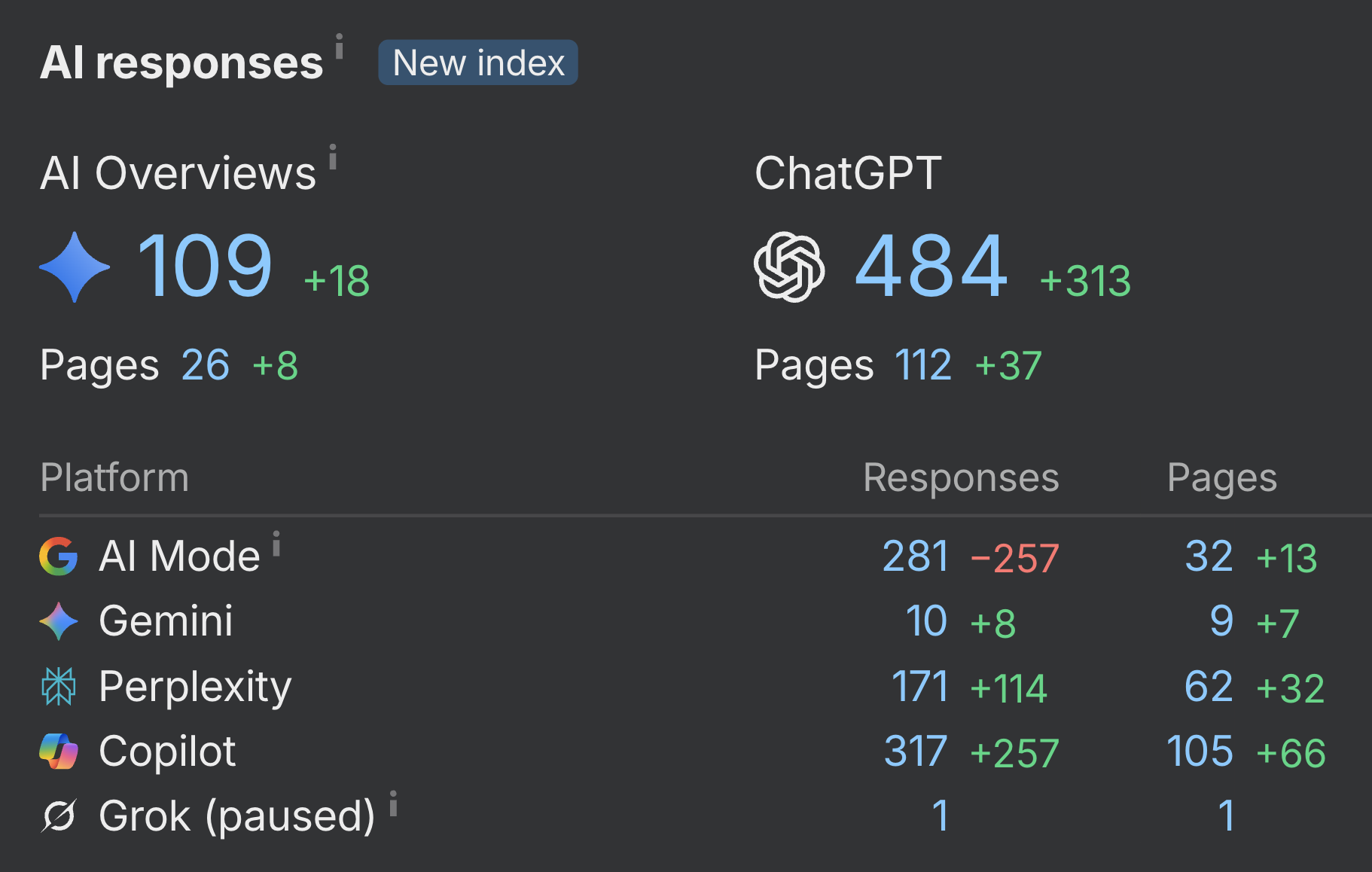
| Platform | Responses citing us | Pages cited | Change in responses |
|---|---|---|---|
| ChatGPT | 484 | 112 | +313 |
| Copilot | 317 | 105 | +257 |
| Google AI Mode | 281 | 32 | −257 |
| Perplexity | 171 | 62 | +114 |
| Google AI Overviews | 109 | 26 | +18 |
| Gemini | 10 | 9 | +8 |
The thing to read out of that table is the spread. The citations are across the whole site, not concentrated in one lucky article: ChatGPT alone cites 112 different pages. That pattern only happens when a lot of pages rank, which is the whole argument of this post. (AI Mode is the exception, down 257 responses over the period. We don't have an explanation for that one yet.)
Three things produced this, and we can't cleanly separate them:
- Content written to be quoted. Answer-first paragraphs, headings that match how people ask, specifics over generalities. The pages cited most are the ones that answer a question outright in the first sentence beneath the heading.
- Links, still. Our July 2026 outreach numbers are below. This is the foundation everything else sits on, because those pages had to rank before anything could cite them.
- Relevance over volume. We stopped submitting to directories and stopped taking low-relevance placements. They were never worth much for rankings and they're worth nothing here, because nothing retrieves them.
Here's the outreach itself, done by hand, over one month:
| July 2026 outreach | |
|---|---|
| Sites contacted | 650 |
| Links earned | 43 |
| Success rate | 6.6% |
That's 43 editorial links in a single month, sent by hand. For cold outreach, converting 6.6% of contacts into a live link is a strong month, and it's the same outreach work ElvixAI automates. It's also the reason the numbers in the first table exist at all: those pages had to rank before anything could cite them.
The other shift was in what we write: high-intent articles aimed at people who have the problem, instead of broad low-intent pieces that pull traffic from people who will never buy. That change was made for conversion reasons, not for AI search, but it helps both. Specific pages answering specific questions are exactly what a retrieval system is looking for.
What we didn't change is the underlying approach. We still find relevant sites, find the person who actually owns the page, and send a personal email from a real inbox. That work produces links and unlinked mentions at the same time, which is the right hedge when nobody knows which will matter more in two years.
Does this mean you should stop building links?
No, and the reasoning is simpler than the debate suggests.
Every mechanism that makes AI citation possible runs on top of search infrastructure that still uses links. To believe link building is finished, you'd have to believe retrieval will stop drawing on search indexes entirely. There's no sign of that, and plenty of movement in the other direction: the major AI products have been adding live search, not removing it.
The risk isn't over-investing in links. It's assuming links alone are enough, which was already a bad assumption in 2020.
Should you do anything differently for AI search?
Yes, and most of it is cheap:
- Put the answer in the first sentence under the heading. If a heading asks "how long does link building take?", the next sentence should say "three to six months," not warm up to it. Retrieval systems pull out a chunk, meaning the heading plus the text right below it. Bury the answer three paragraphs down and the chunk that gets extracted doesn't contain one, so it doesn't get quoted.
- Use question-shaped headings where the content genuinely is a question. They match how people phrase things to an assistant, which makes the passage a better retrieval match.
- Be specific and attributable. Numbers, dates, named sources, concrete examples. Vague guidance gets paraphrased without attribution; a specific claim gets quoted and cited, because the citation is what makes the claim credible.
- Cite your own sources. Pages that link to primary sources tend to be treated as better sources themselves. It also makes the piece more useful.
- Keep structured data honest. Markup like
ArticleandBreadcrumbListgives parsers explicit clues about what a page means. Be careful what you expect from it, though: Google retired FAQ rich results in 2026, soFAQPagemarkup no longer earns anything in the search results, even though it still describes the page accurately for everything else that reads it. Schema that disagrees with the visible content is worse than none at all.
None of that is new advice. It's the same advice that made pages good for featured snippets, which is not a coincidence: both are extraction problems.
How long until this settles?
It won't, in any way that makes long-range predictions useful.
What's worth noticing is that the direction of travel has been consistent. Every major AI product has moved toward live retrieval and visible citations, not away. As long as that holds, the pages that get cited will keep being drawn from the pages that rank.
So the safest position is the boring one:
- Keep earning links from relevant sites
- Write pages that answer a specific question in the first sentence
- Take the unlinked mentions you'd previously have discarded
If AI search rewrites the rules again next year, that work still holds its value, which is more than can be said for anything optimized purely for how the tools happen to behave this quarter.
About the author

Hasan Cagli
Founder, ElvixAI
Runs SEO and link building for his own products, ElvixAI and PostPlanify, which means writing the cold emails, taking the rejections, and watching what actually earns a link. He shares that experience here as it happens: prospecting, outreach deliverability, on-page SEO, and increasingly, getting cited by AI answer engines.